Get A Quote

Found baby mice nesting in your property? Heard scratching in the walls or behind your cupboards? Discovered mice droppings or chewed food bags?
If you suspect you have mice nesting in your property, call expert pest controllers Eliminate Ltd today.
We provide professional mouse removal in Edinburgh, Glasgow and throughout Central Scotland for homeowners and business owners who are experiencing these uninvited guests.
We use mice removal methods that target the particular species to ensure only the pest is affected. We follow CRRU Code of Best Practice to approach mouse control in a humane and responsible way, following the Risk Hierarchy. Proofing the site of the mice infestation to prevent entry and addressing the hygiene of the area is a priority to prevent reoccurrence, whilst baits, live traps and rodenticides may be necessary to address the existing infestation.
Whether you’ve discovered mice at your home, on your farm, shop or food establishment, don’t delay. Mice can be destructive to your property and be a threat to human health and hygiene, especially if they’ve access to food stores.
Whether you need domestic or commercial mice control in Scotland, contact Eliminate Ltd today. We operate a 24 hour service, 7 days a week, so if you need professional mice exterminators in Edinburgh quickly, we’re just a phone call away. Or contact us to discuss a daytime appointment or to arrange regular pest maintenance plan.

Proud to be a Which? Trusted Trader
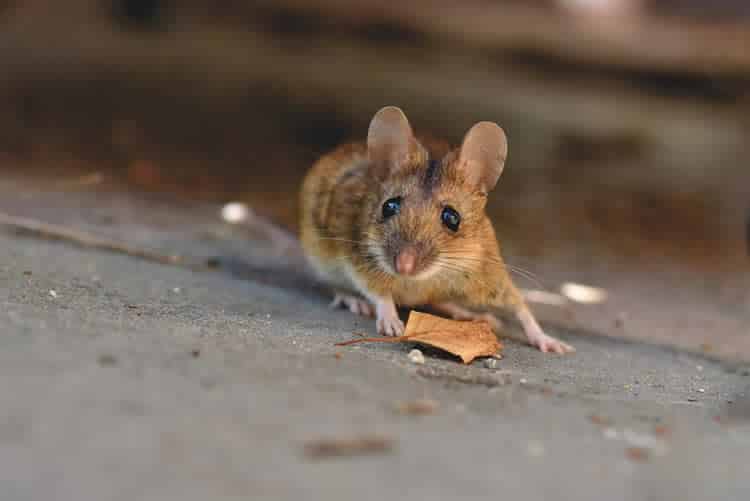
Mice can breed from the age of 6 weeks, and reproduce all year round with litters from 4-12 pups each time. The females can get pregnant just 24 hours after giving birth, and with a gestation period of around 21 days, that could mean a single female mouse could have 10 litters in a year.




If you have a mouse infestation in Edinburgh or Central Scotland at your property, request a same-day visit or book a visit at a time that suits you.

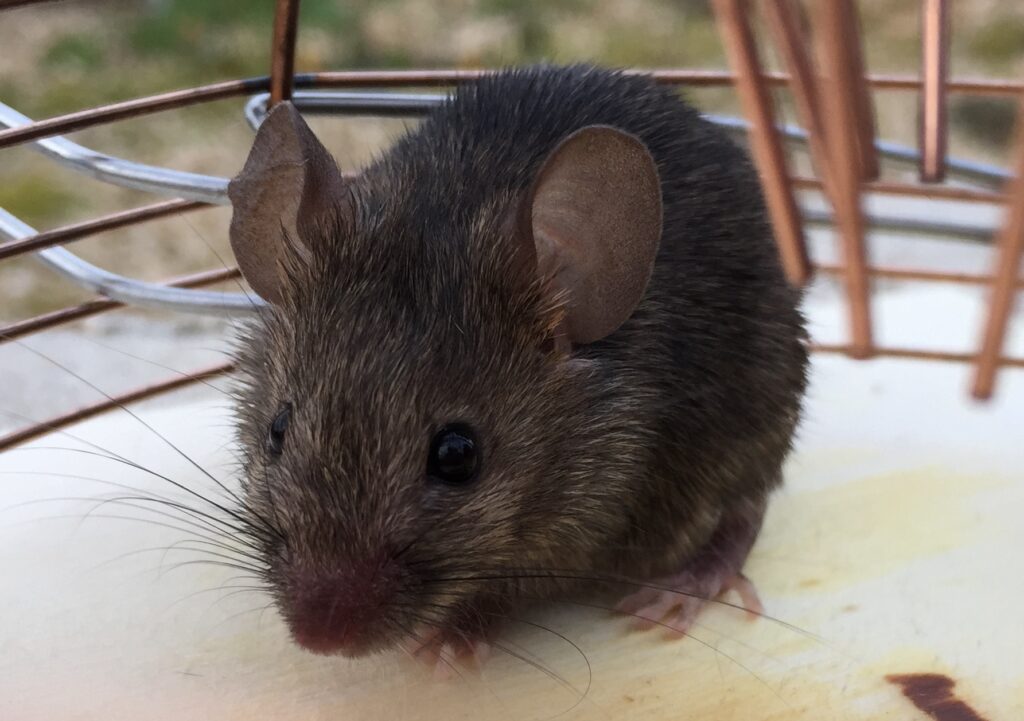

House mice tend to be nocturnal, since they are naturally shy creatures who do not like to be seen by humans or larger animals. They can often be found hiding in dark corners or crevices during daylight hours, but will come out at night when humans are asleep.
They are extremely domesticated and have no problem sharing their homes with other species as long as they don’t feel threatened by them. House mice have been known to share space with cats, dogs, birds and even rats without any issues arising between them – although this does depend on how much space each animal requires for itself on any given day (or night).
The house mouse has an extremely high population density in urban areas due to its ability to survive off scraps from humans and other animals – making them ideal for use as pets.
Also referred to as a wood mouse. The field mouse is a small rodent with a sandy brown coat and a white/grey underbelly. It’s also known as a wood mouse, because it lives in trees and burrows in the ground. The field mouse has large back feet that help it spring from place to place, as well as a long tail that matches the length of its body.
Harvest mice are a pretty common sight in the fields of cereal crops, such as wheat and oats, in reed beds and in other tall ground vegetation, such as long grass and hedgerows. Harvest mice have reddish-brown fur with white underparts and a naked, highly prehensile tail, which it uses for climbing.
The harvest mouse is a small rodent that only weighs about 30 grams (1 ounce). They are found throughout Europe from the UK to Siberia, as well as Asia from the Ukraine to Japan.
The yellow-necked mouse is a small mammal that lives primarily in China. They are closely related to wood mice, but they have a band of yellow fur around the neck and are slightly larger overall.
This species is largely terrestrial, but does climb shrubs and trees when it needs to escape predators or find food. It is active during the day and spends much of its time foraging for seeds, fruit and insects.
Looking for mouse pest control solutions in your area? Call Eliminate Solutions today at 0800 206 2679.